WooCommerce runs a huge share of the world's online stores for good reason: you own everything and it can do almost anything. Its weakness is equally famous — the admin was built for WordPress users, not shopkeepers. Finding today's orders, updating twenty prices, printing an invoice: all possible, none pleasant, and every new staff member needs training in WordPress before they can do their actual job.
The operations gap.
Watch a store team work and the friction is always the same tasks: bulk price updates before a promotion, importing a new season's products from a spreadsheet, checking what's low on stock, printing packing slips for the day's orders, and answering "how did we do this month?" without exporting anything. These are operator jobs, and the default admin makes each one a small expedition. That gap is exactly what we built Store Portal to close — a dedicated portal on top of your own WooCommerce store, organized around the jobs, not the data models.
What day-to-day looks like in the portal.
- Products — search and filter everything, select in bulk and change prices, stock or status in one action; import a CSV with preview and rollback; duplicate a product for a seasonal color run in one click; print barcode and QR labels.
- Orders — a live dashboard by status, branded PDF invoices and packing slips printed straight from the order, and a peak-hours heatmap that tells you when to schedule staff.
- Counter sales — a built-in POS any staff member can run on a tablet: scan, discount, take cash or card, reconcile the shift in one click.
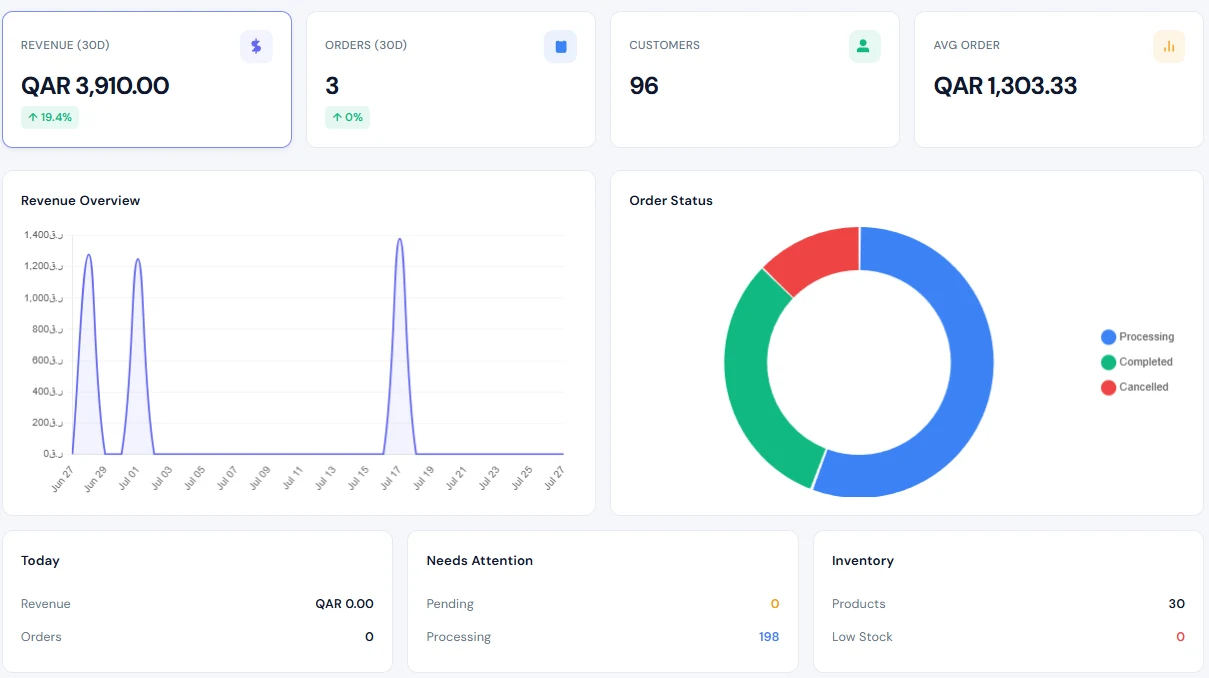
- Numbers — revenue, top products, coupon performance and customer lifetime value in one dashboard, on your phone.
- And because it's a plugin on your WordPress installation, your data never leaves your own store — the regular admin stays right there for your developer.
The feature nobody else has: AI Virtual Try-On.
For fashion retailers, Store Portal ships something genuinely rare: customers can see themselves wearing your products before buying. They upload a photo — or just a face photo plus measurements — and the AI generates a photorealistic try-on with fit scoring and styling tips. Fashion's biggest cost is returns, and "didn't look as expected" is the biggest reason; every convincing try-on is a return avoided. The portal tracks which try-ons turned into sales, so the ROI isn't a feeling — it's a report.
What it costs.
If Odysense builds your e-commerce store, Store Portal is included free for the first year. After that it's QAR 170/month — or QAR 150/month billed yearly — with optional add-ons (WhatsApp and SMS notifications, automated backups, managed SEO, email marketing automation and more) priced openly so the platform grows with the store. Ask us for a walkthrough on a real store — it makes the case better than any article.